
Commercial & Care
Cabinet Refacing in Lexington, KY
Lexington Custom Cabinets refaces existing cabinetry for homeowners who want a substantially different style without rebuilding a layout that already works. New doors and drawer fronts, coordinated exposed surfaces, updated hardware, and finish selections can shift the room from dated to tailored while preserving sound cabinet boxes and the basic footprint.
Request a free quote
Tell us the room and rough size.
Cabinet Refacing Lexington KY
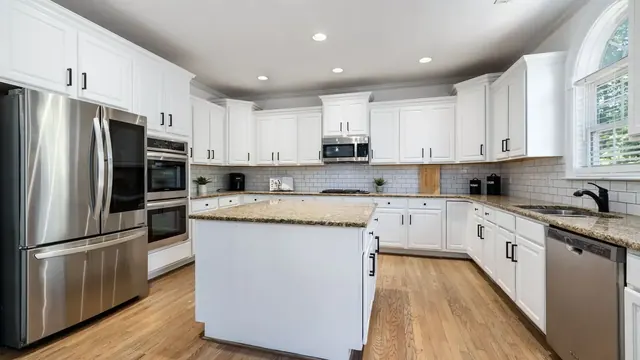
The design opportunity is broader than simply choosing a new door. Refacing can move a kitchen toward painted Shaker cabinetry, a cleaner slab-front look, a more traditional profile, or a warmer natural-wood direction depending on the existing room. We review door style, color, grain, hardware, countertops, backsplash, and adjacent trim together so the updated cabinetry feels cohesive rather than like a surface-level patch.
We also look at how the room functions before recommending refacing. If the cabinet boxes are sound and the layout serves the household well, keeping that structure can make sense. Interior storage upgrades, soft-close hardware, drawer improvements, and selected modifications can be folded into the project so the result feels better to use as well as better to look at.
That distinction is especially useful across Lexington's varied housing stock. Established neighborhoods and H-1 districts may contain cabinetry or room proportions worth preserving, while newer homes may have perfectly workable cabinet layouts that simply need a more personal finish and door style. Refacing is strongest when the underlying plan deserves to stay.
Door and Drawer Front Options
Door and Drawer Front Styles
Because the doors are entirely new, you are not limited to what was there. Shaker, slab, raised panel, and beadboard are all available, and changing the profile is what makes a refaced kitchen look genuinely different.
Overlay Changes
You can usually move from partial overlay to full overlay, which covers more of the face frame and modernises the kitchen considerably. Moving to inset is generally not possible on existing frames.
New Drawer Boxes
Refacing normally keeps existing drawer boxes, but where they are stapled or failing we can replace them with dovetailed boxes on full-extension glides. This is the upgrade people notice most.
Hardware and Hinges
New concealed soft-close hinges and pulls throughout. Old surface hinges are replaced, which changes the look as much as the doors do.
Refacing Materials and Finishes
The veneer skin has to match the new doors convincingly, since it sits directly beside them on the face frames. We use real wood veneer rather than a printed laminate wherever the doors are stained, because a printed grain against a real one is immediately obvious. For painted refacing the substrate matters less and the preparation matters more. Doors come in the same species we use for new cabinetry: maple and poplar for painted, cherry, white oak, and hickory for stained. Finishes are sprayed rather than brushed.
Refacing Style Directions
Modernising a Dated Kitchen
Moving from raised panel oak to a painted shaker in full overlay is the single most transformative refacing change, and by far the most requested.
Period-Appropriate Refacing
In an older Lexington home, refacing to a partial overlay or beadboard door with matched trim can suit the house better than what is currently there.
Two-Tone Refacing
Perimeter in one finish and island in another, which is possible in refacing precisely because the doors are all new anyway.
Hardware-Led Refresh
Where the doors are actually fine, sometimes only the hardware and hinges need changing. We will say so rather than quoting a full reface.
Where Cabinet Refacing Fits Lexington Housing
Refacing is particularly useful in Lexington homes from the later twentieth century and newer suburban eras where the cabinet footprint already suits the room. If the boxes are square, dry, and securely installed, changing doors, drawer fronts, exposed faces, hinges, and hardware can produce most of the visible transformation without disturbing flooring, counters, or utilities.
Older historic-district homes need a more selective approach. Existing cabinetry may include original or well-built face-frame work worth restoring, but a later remodel may also have introduced a poor layout that no new door can fix. We separate those cases during the site measure so the recommendation is based on the room and cabinet construction, not on selling the largest scope.
Before We Reface Your Cabinets
Refacing is only worth doing on boxes that deserve to be kept, so the assessment matters more than in most projects. We check:
- Carcass material and condition, particularly whether particleboard has swollen anywhere
- Water damage under sinks and around dishwashers, which is the most common disqualifier
- Whether boxes are square and still firmly attached to the wall
- Face frame condition and whether it will take a veneer skin cleanly
- Whether the layout genuinely works, because refacing cannot change it
- Countertop condition, since refacing usually keeps the existing tops
How Your Refacing Project Works
Assess the boxes honestly
We look at carcass condition and layout first, and we will tell you if refacing is the wrong answer for your kitchen.
Drawings and samples
Door and finish samples viewed against your existing boxes and countertops, since the new work has to live with what stays.
Field verify
Every opening measured individually, because existing openings vary more than people expect across a single kitchen.
Reface and install
Doors and fronts built and finished off site, then old doors removed, frames skinned, and new doors hung and adjusted.
Common questions
Cabinet Refacing FAQs
How much cheaper is refacing than replacing?
When is refacing the wrong choice?
Can I change the door style when refacing?
Can I go to inset doors when refacing?
How long does refacing take?
Find out if refacing is right for your kitchen
Send photos of your cabinets, including under the sink. We can usually tell you from photographs whether the boxes are worth keeping.