
Specialty Millwork
Custom Aquarium Stand Cabinetry in Lexington, KY
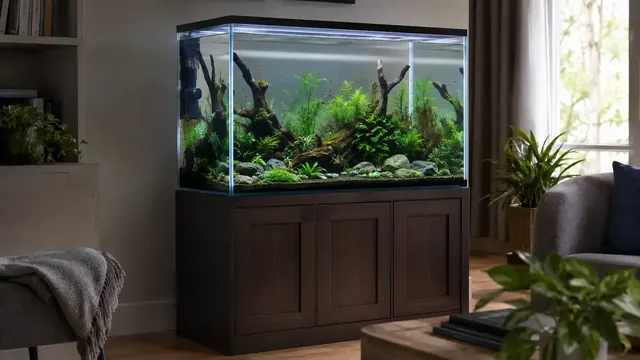
Lexington Custom Cabinets designs and builds custom aquarium stands and integrated aquarium cabinetry for homeowners who want the display to feel like part of the room rather than a piece of equipment sitting in it. We coordinate the stand, surrounding millwork, access panels, ventilation, equipment storage, lighting, materials, and finish around the exact aquarium system and the style of the space.
Request a free quote
Tell us the room and rough size.
Custom Aquarium Stand Cabinetry Lexington KY
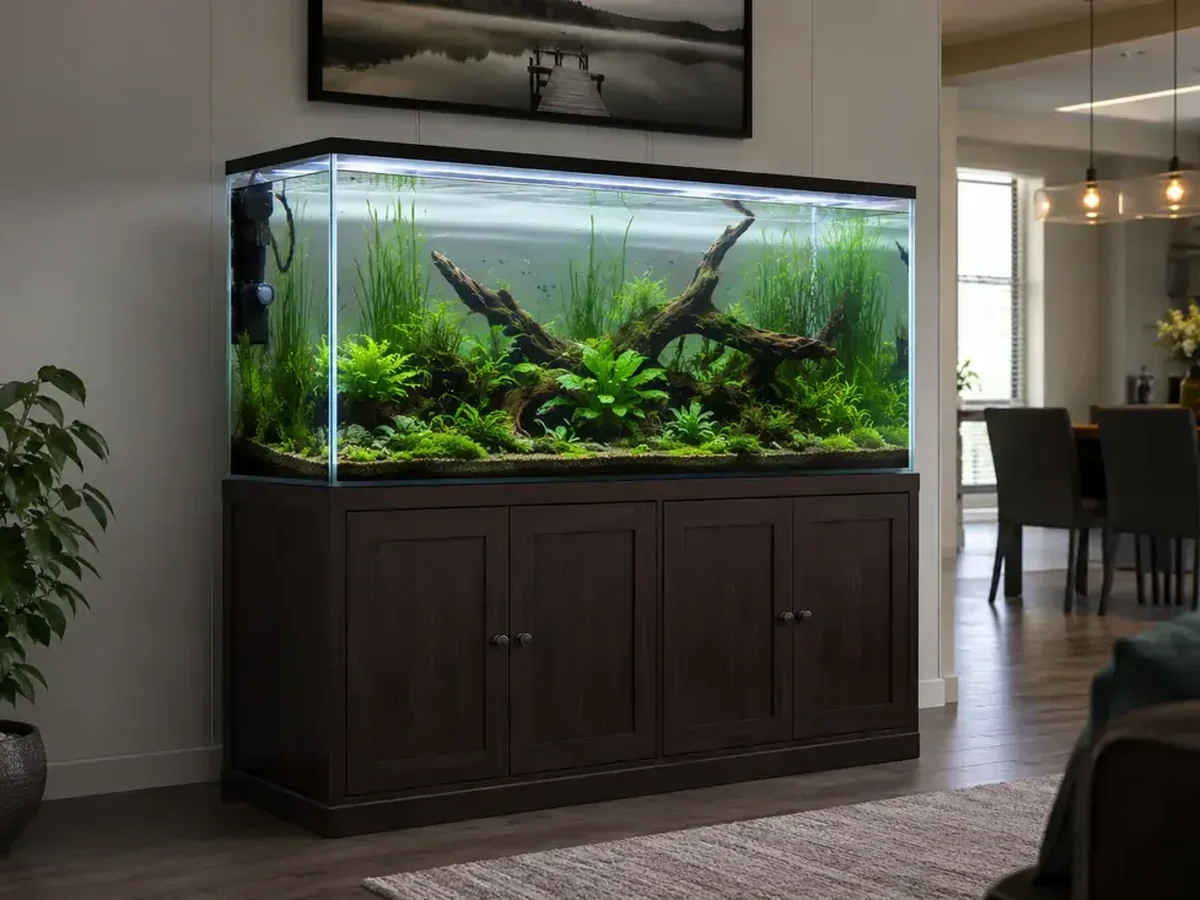
The visual direction can range from furniture-style stained wood to painted built-ins, contemporary slab fronts, full-wall display cabinetry, or a stand designed to match nearby millwork. We review finish samples, door profiles, hardware, panel proportions, and the relationship between the tank and the room so the aquarium becomes an architectural focal point instead of a technical box.
Planning also accounts for the equipment the owner wants concealed and the access required to maintain it. Sumps, filtration, plumbing, controllers, power, ventilation, and service clearances can be organized into the cabinetry from the beginning while keeping the exterior clean. Materials and hardware are selected with the humid, water-adjacent setting in mind, and the structure is engineered around the actual tank and system rather than a generic furniture dimension.
In Lexington, aquarium cabinetry may be going into anything from an established home with substantial trim to a newer open-plan living space. In historic or character-rich rooms, proportions and surrounding millwork can be matched carefully; in newer homes, the aquarium can be used to create the kind of built-in architectural presence the room did not originally have.
Types of Aquarium Cabinetry We Build
Freestanding Display Stands
A cabinet stand sized to a specific tank, built to carry the filled weight with the tank fully supported across its base.
Built-In Aquarium Surrounds
The tank set into a wall or a run of cabinetry, viewed from one or both sides, with access panels for maintenance.
Stand and Canopy Combinations
A matching hood above the tank concealing lighting and reducing evaporation, ventilated so heat can escape.
Sump and Filtration Cabinets
The stand interior built as a working equipment bay, with a sealed and drained base rather than a decorative cupboard.
Room Divider Installations
A tank viewable from two rooms, which puts the stand in the hardest structural position and needs the most planning.
Aquarium Stand Features and Detailing
Fully Supported Tank Surface
A continuous top that supports the entire tank base rather than perimeter-only support, unless the tank is rimmed and designed for it.
Sealed and Drained Bases
The cabinet floor sealed and detailed to contain a spill, because equipment leaks are a question of when rather than if.
Ventilated Equipment Bays
Pumps, heaters, and ballasts all produce heat, and a sealed cabinet around them shortens their life and raises tank temperature.
Full-Access Doors
Wide openings so a sump and return pump can actually be removed for servicing, not just reached.
Cable and Plumbing Chases
Routes for return lines, power, and dosing lines that keep them off the cabinet floor where water collects.
Door, Access and Ventilation Options
Wide Access Doors
Sized so equipment comes out rather than only being reachable. Servicing a sump through a narrow opening is miserable.
Removable Panels
Side or back panels that come off entirely for major maintenance, which a hinged door cannot match.
Ventilated Door Detail
Louvres or a gap detail so equipment heat and humidity leave the cabinet.
Canopy Access
Hinged or lift-off canopy panels for feeding and light maintenance without dismantling anything.
Moisture-Resistant Materials and Finishes
This is a permanently humid cabinet with standing water above it, so plywood throughout and never furniture board. Every internal surface gets sealed, including the base, the back, and all cut edges, because a leak that soaks an unsealed panel destroys it. Marine-grade plywood is worth considering for the base panel specifically. Exterior finishes match the room, usually painted maple or a stained hardwood, in a sprayed catalyzed system that tolerates splash. Hardware should be corrosion-resistant, particularly on a saltwater system where salt creep reaches everything nearby.
Aquarium Cabinetry Design Directions
Furniture-Grade Display
The stand detailed as a piece of furniture matching the room, so a large tank reads as intentional rather than as equipment.
Built-In Wall Feature
The tank set flush into cabinetry or a wall, with maintenance access from an adjacent room or a service panel.
Modern Minimal
A slab-fronted stand with concealed access and integrated cable management, letting the tank be the only visual event.
Working Aquarist Setup
Access and ventilation prioritised over appearance, for a serious reef or breeding system where servicing happens constantly.
Before We Build Your Aquarium Stand
An aquarium stand is the only cabinetry we build where getting it wrong risks the floor as well as the cabinet. Before building we confirm:
- Tank dimensions, volume, and whether it is rimmed or rimless, which changes the support detail
- Fresh or salt water, since salt is heavier and far more corrosive to hardware
- Total filled system weight including substrate, rock, and sump
- Floor construction and, for large upstairs systems, whether framing capacity has been assessed
- All equipment going in the cabinet, with dimensions and heat output
- Plumbing and power routes, and whether a drain is available nearby for water changes
How Your Aquarium Stand Project Works
Measure and calculate the load
We start with the filled weight of the whole system, because that decides the structure before anything else is discussed.
Drawings and samples
A plan showing the load path, equipment bay layout, and access openings, plus finish samples for a splash-prone environment.
Field verify
Floor construction, equipment dimensions, and plumbing and power routes confirmed before fabrication.
Build, finish, install
Built and sealed off site, then set and levelled in both axes. We level before the tank is filled, because afterwards is too late.
Common questions
Aquarium Stand Cabinetry FAQs
How much does a filled aquarium actually weigh?
Can a large aquarium go upstairs?
Why does the stand need to be perfectly level?
Do I need ventilation inside the stand?
What happens if something leaks inside the cabinet?
Get a quote on your aquarium stand
Tell us the tank size, whether it is fresh or salt, and where it is going. Filled weight drives the entire build.